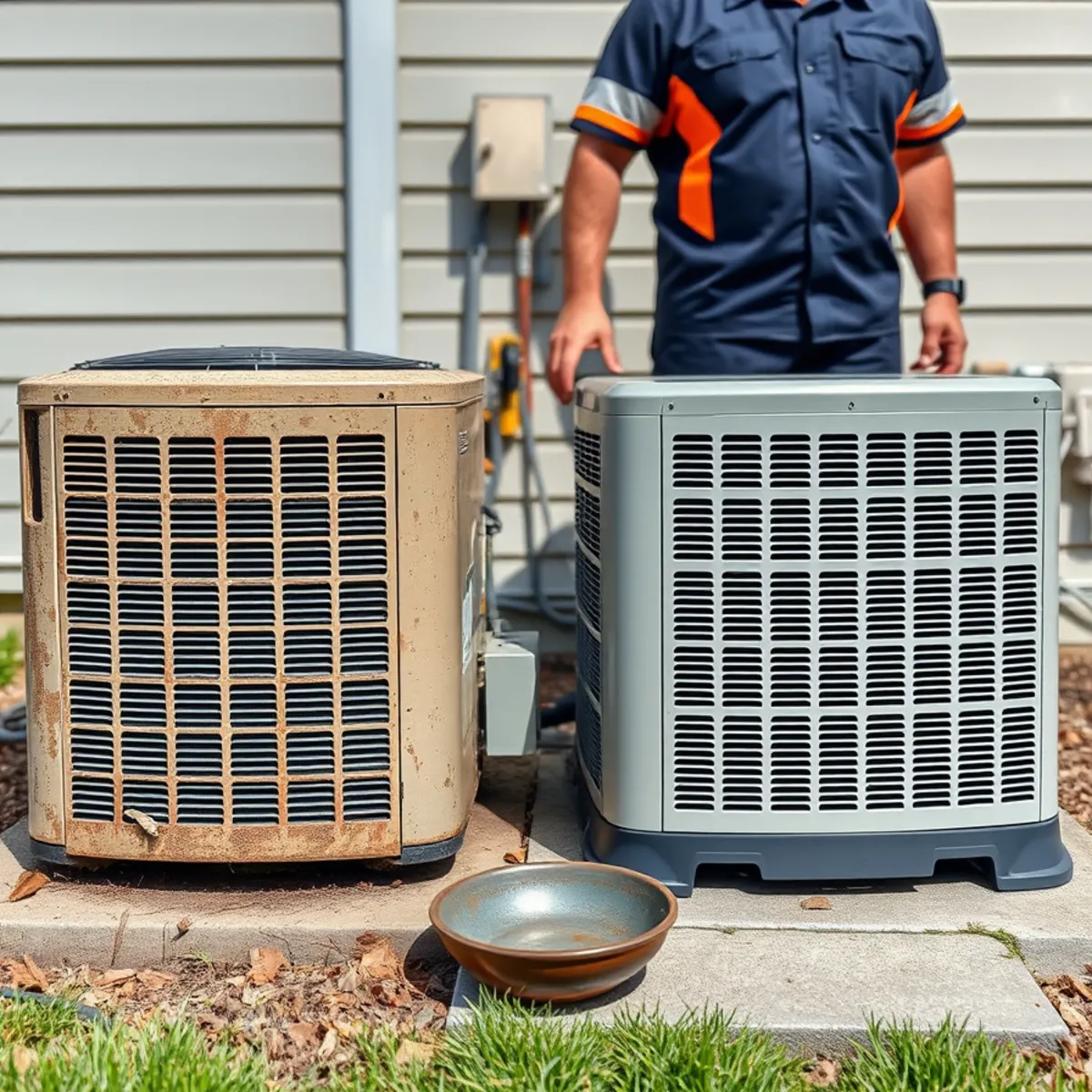

Here's the short version: a bigger air conditioner is not a better air conditioner. That surprises a lot of folks. When the house won't cool, the instinct is to go up a size. With air conditioning, that instinct will cost you comfort, money, and the life of the equipment.
Sizing is the single most important decision in a new AC or heat pump install. Get it right and the system runs long, quiet, efficient cycles that pull the sticky out of our Piedmont air. Get it wrong and you'll fight short cycling, high bills, and a house that feels cold and clammy at the same time. So let's walk through how sizing actually works, in plain language.
What "Size" Means: Tons and BTUs
Air conditioners are rated in tons. One ton equals 12,000 BTUs of cooling per hour. Most homes around Mount Gilead land somewhere between 2 and 5 tons.
- A 2-ton unit moves 24,000 BTUs/hour
- A 3-ton unit moves 36,000 BTUs/hour
- A 5-ton unit moves 60,000 BTUs/hour
A "ton" has nothing to do with weight. It's an old measure tied to how much heat it takes to melt a ton of ice in a day. The number you care about is the cooling capacity, and it needs to match the heat your home actually gains on a hot afternoon. Not more. Not less.
Why Bigger Is Worse, Not Better
This is the part most homeowners have never been told. An oversized air conditioner cools the air temperature fast, then shuts off. Sounds good, right? It isn't.
Cooling a home is two jobs at once: dropping the temperature and pulling out moisture. Removing humidity takes time. The longer the cool coil runs, the more water it wrings out of your air. An oversized unit hits the thermostat number in a few minutes and shuts down before it has done any real dehumidifying. The result is a house that reads 72 on the thermostat but feels damp, muggy, and clammy.
Around here that matters more than almost anywhere. Our long humid summers, the moisture rolling off Lake Tillery, and rain totals near 50 inches a year mean humidity is the real enemy, not just heat. A right-sized system runs longer, steadier cycles and keeps indoor moisture in check. An oversized one short cycles all day.
Short cycling brings its own pile of problems:
- Hard starts that wear out the compressor years early
- Hot and cold swings instead of steady comfort
- Higher electric bills from constant stop-and-start
- More breakdowns and a shorter equipment life
- That cold-but-clammy feeling that makes you crank the thermostat lower and waste even more
Undersizing has the opposite problem. The unit runs nonstop on a 90-degree day and never quite catches up, and the compressor burns out from never getting a rest. But in my experience around Mount Gilead, oversizing is the far more common mistake. Somebody guessed high "to be safe," and the homeowner has paid for it ever since.
The Rule of Thumb (and Why It's Only a Starting Point)
You'll see online calculators that say roughly 20 BTUs per square foot, or about one ton for every 500 to 600 square feet. For a 1,800-square-foot home that points to somewhere around 3 to 3.5 tons.
That math is fine for a back-of-the-napkin guess. It is not how a system should ever be sized for real. Square footage alone ignores almost everything that actually drives your home's heat load. Two houses the same size can need different tonnage depending on a dozen factors. Treat the rule of thumb as a sanity check, never as the answer.
What Actually Determines the Size You Need
A proper sizing looks at how your specific home gains and loses heat. The big drivers:
- Insulation. Attic, wall, and floor insulation. A tight, well-insulated home needs far less cooling than a drafty one of the same size.
- Windows. How many, which direction they face, single or double pane, and how much afternoon sun they take. West-facing glass is a heat magnet on a Carolina summer evening.
- Ceiling height and layout. You cool volume, not just floor area. Tall ceilings and open great rooms change the math.
- Air sealing and ductwork. Leaky ducts in a hot attic or crawl space can bleed away a big chunk of your cooling. Many older Mount Gilead homes have duct losses that quietly oversize the load.
- Sun exposure and shade. A home shaded by mature trees gains less heat than one sitting in full sun.
- Local climate. Our USDA Zone 8a design temperatures, summer highs near 90, and heavy humidity all factor in.
- Number of occupants and big heat sources. People, kitchens, and sun-facing rooms all add load.
This is also why a finished bonus room, an addition, or new energy-efficient windows can change what your home needs from what it needed ten years ago.
Manual J: How Sizing Is Done Right
The industry standard for sizing is a Manual J load calculation. It's a room-by-room accounting of every source of heat gain in your home, run against our local design conditions. It spits out a real number for how many BTUs your house actually needs at peak.
An honest contractor does the homework before quoting a system. That means measuring rooms, checking insulation, counting and facing your windows, inspecting the ductwork, and running the load. It is not a guess off the old unit's nameplate, and it is not "your neighbor has a 3-ton, so you need a 3-ton." Two houses on the same street can genuinely need different equipment.
If someone quotes you a replacement system without ever looking at your insulation, windows, or ducts, that's a red flag. They're guessing, and you're the one who lives with the guess.
A few things a good load calc protects you from:
- Paying for tonnage and efficiency you'll never use
- Living with humidity problems a smaller, longer-running unit would have solved
- Replacing a system that fails early because it was never matched to the home
Don't Just Copy Your Old Unit
The most common shortcut is to read the model number off the existing condenser and order the same size. Sometimes that's right. Often it isn't.
That old unit may have been oversized when it was installed. Your home may have changed since then. Newer systems also move air and remove humidity differently than equipment from fifteen or twenty years ago. The smart move is to verify the load, not assume the past was correct.
If your current home struggles with humidity, hot and cold rooms, or short cycling, that's a clue the existing system was never the right size in the first place. Replacing it with the same size just repeats the mistake.
A Note on Older and Lake-Area Homes
Mount Gilead has a lot of character homes, including the sandstone-trimmed houses in the historic district that were never built with ductwork. Forcing a conventional sized central system into a home like that often isn't the right call. A ductless mini-split lets us zone the cooling and size each head to the actual room, which usually beats one oversized central unit fighting the floor plan.
Lake homes around Tillery have their own twist. Extra humidity off the water makes longer, steadier run times and proper humidity control even more important. In every one of these cases, the answer is the same: size to the home, not to a formula.
The Honest Bottom Line
Right-sizing isn't about selling you the biggest system on the lot. It's about matching the equipment to your home so it runs efficiently, controls humidity, and lasts. A unit that's a half-ton too big will cost you every single summer it's installed.
Bigger isn't better. Correct is better.
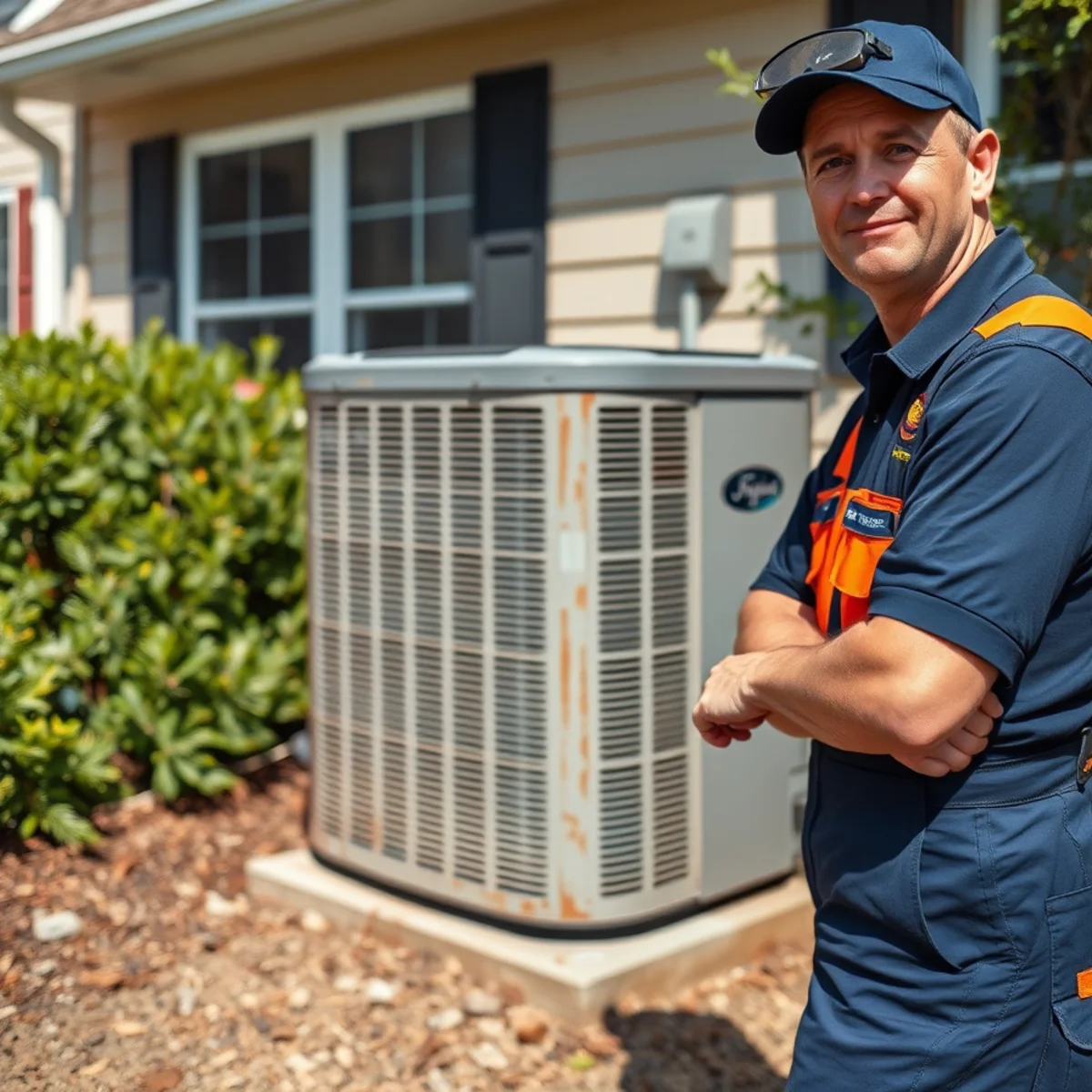
If you're weighing a new system or a replacement for your home around Mount Gilead, let EM Contractors LLC do it right. We're a family-owned, local HVAC company, in business here since 2005, and the Mabe family has done this work in Montgomery County for decades. We'll measure your home, look at your insulation, windows, and ductwork, run the load, and give you an honest recommendation, never a high-pressure upsell. Call EM Contractors LLC in Mount Gilead today and we'll help you get the size right the first time, whether that's a new AC installation or an efficient heat pump built for the Carolina climate.
Frequently Asked Questions
No. A bigger unit cools the air temperature fast, then shuts off before it pulls out the moisture. That leaves your house feeling cold but damp and clammy. Around Mount Gilead, with our long humid summers and the moisture off Lake Tillery, humidity is the real enemy. A right-sized system runs longer, steadier cycles and keeps that moisture in check. Bigger isn't better. Correct is better.
Use it as a sanity check, not the answer. The rule of thumb is roughly 20 BTUs per square foot, or about one ton per 500 to 600 square feet, but square footage ignores almost everything that drives your home's heat load. Two houses the same size can need different tonnage depending on insulation, windows, ceiling height, ductwork, and sun exposure. For a real number, the home needs a Manual J load calculation.
It's the industry standard for sizing an AC or heat pump. It's a room-by-room accounting of every source of heat gain in your home, run against our local design conditions, and it gives a real number for the BTUs your house actually needs at peak. An honest contractor measures rooms, checks insulation, counts and faces your windows, and inspects the ductwork before quoting. If someone quotes a system without looking at any of that, that's a red flag.
Not without checking. That old unit may have been oversized when it went in, your home may have changed, and newer systems move air and pull humidity differently than equipment from fifteen or twenty years ago. If your current system struggles with humidity, hot and cold rooms, or short cycling, that's a clue it was never the right size. Replacing it with the same size just repeats the mistake. We verify the load instead of assuming the past was right.
Related Services
Written by
EM Contractors LLC
A family-owned heating and air conditioning company serving Mount Gilead, NC since 2005. Owner Eric Mabe and his crew share these tips from real work in local homes and businesses — honest advice, no sales pressure.