If you own a home around Mount Gilead, you've probably wondered how many years you've got left on the unit humming outside your window. It's a fair question. A new system is a real expense, and nobody wants to be surprised in the middle of a 90-degree July afternoon.
Here's the honest answer up front: most HVAC systems in our part of North Carolina last somewhere between 12 and 20 years. The exact number depends on the type of equipment, how well it was installed, and how it was cared for. Our long, humid Piedmont summers are hard on equipment, and that shortens the clock compared to drier or cooler parts of the country.
Let me walk you through what to really expect.
Typical Lifespans By Equipment Type
Not every piece of your system wears out at the same rate. Here's what we see in the field around Montgomery County:
- Heat pumps: 12 to 15 years. Heat pumps run nearly year-round here. They cool in summer and heat in winter, so they rack up far more run-time than a furnace that only works half the year. That extra workload is why they tend to land on the shorter end.
- Air conditioners (AC only): 12 to 17 years. A straight AC unit gets a break in winter, so it often outlives a heat pump.
- Gas furnaces: 15 to 20 years, sometimes more. Fewer moving parts and seasonal-only use help them last.
- Oil furnaces: 15 to 25 years with good maintenance, though parts get harder to find as they age.
- Ductless mini-splits: 12 to 20 years. These do well when sized right and kept clean.
- Ductwork: 20 to 30 years, but leaky or crushed ducts can drag down a brand-new unit's performance long before then.
- Water heaters: 8 to 12 years for a tank model. Not strictly HVAC, but we get asked, so there it is.
These are realistic ranges, not guarantees. I've pulled out 9-year-old units that were beat, and I've serviced 22-year-old furnaces still chugging along. The difference almost always comes down to installation and upkeep.
Why North Carolina Weather Wears Systems Down Faster
Our climate is the single biggest factor most homeowners don't think about. Here in the Uwharrie Piedmont we get long, humid summers with highs near 90, mild winters that rarely dip below 20, and around 50 inches of rain a year. That combination is tough on cooling equipment.
Here's what's actually happening to your system:
- Long compressor run-times. Humid air holds heat, so your unit runs longer to hit the same temperature. More run-time means more wear on the compressor, the heart of the system.
- Heavy moisture load. Your AC isn't just cooling air, it's pulling water out of it all summer. That means more condensate, more strain, and more chances for a clogged drain line or a mold problem if it's neglected.
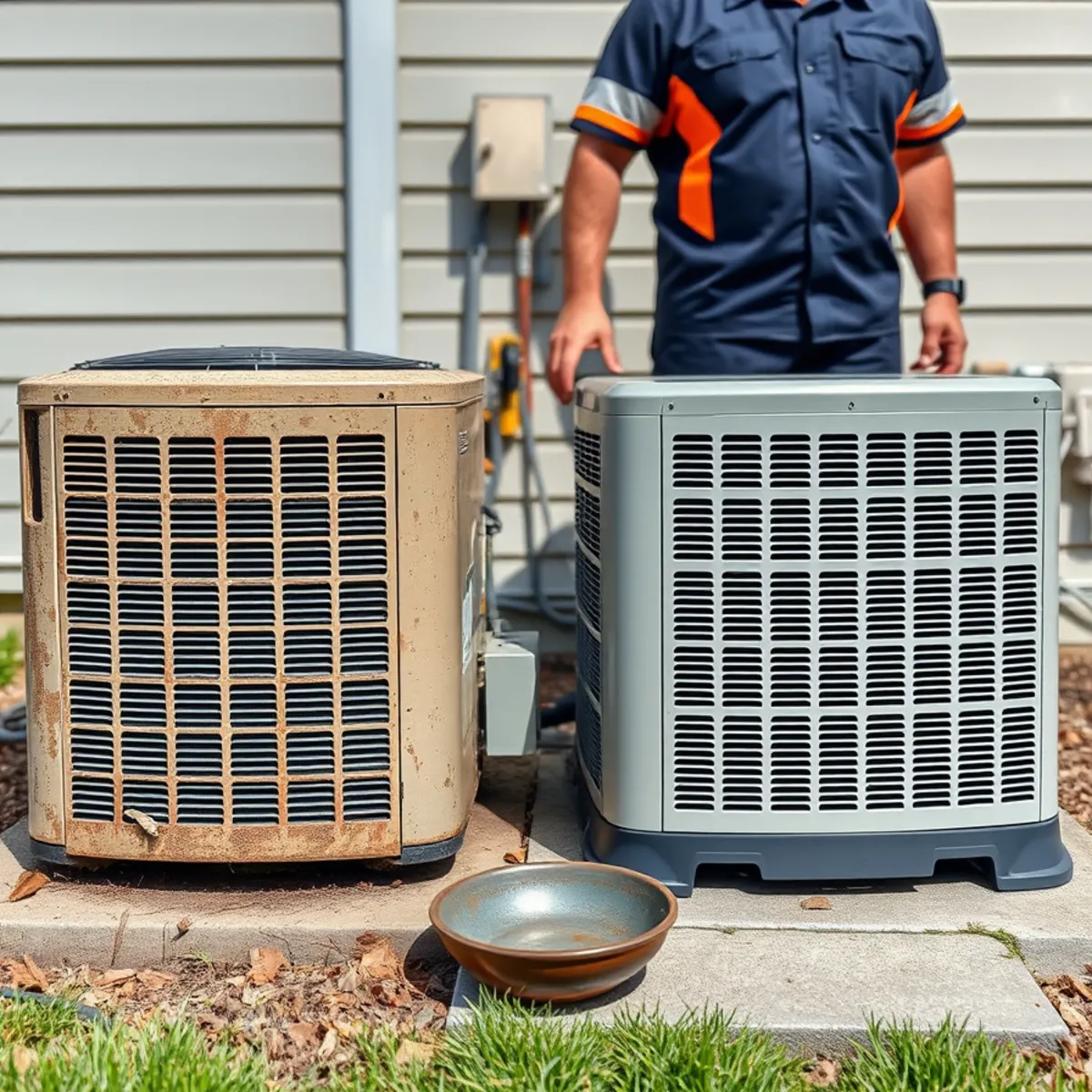
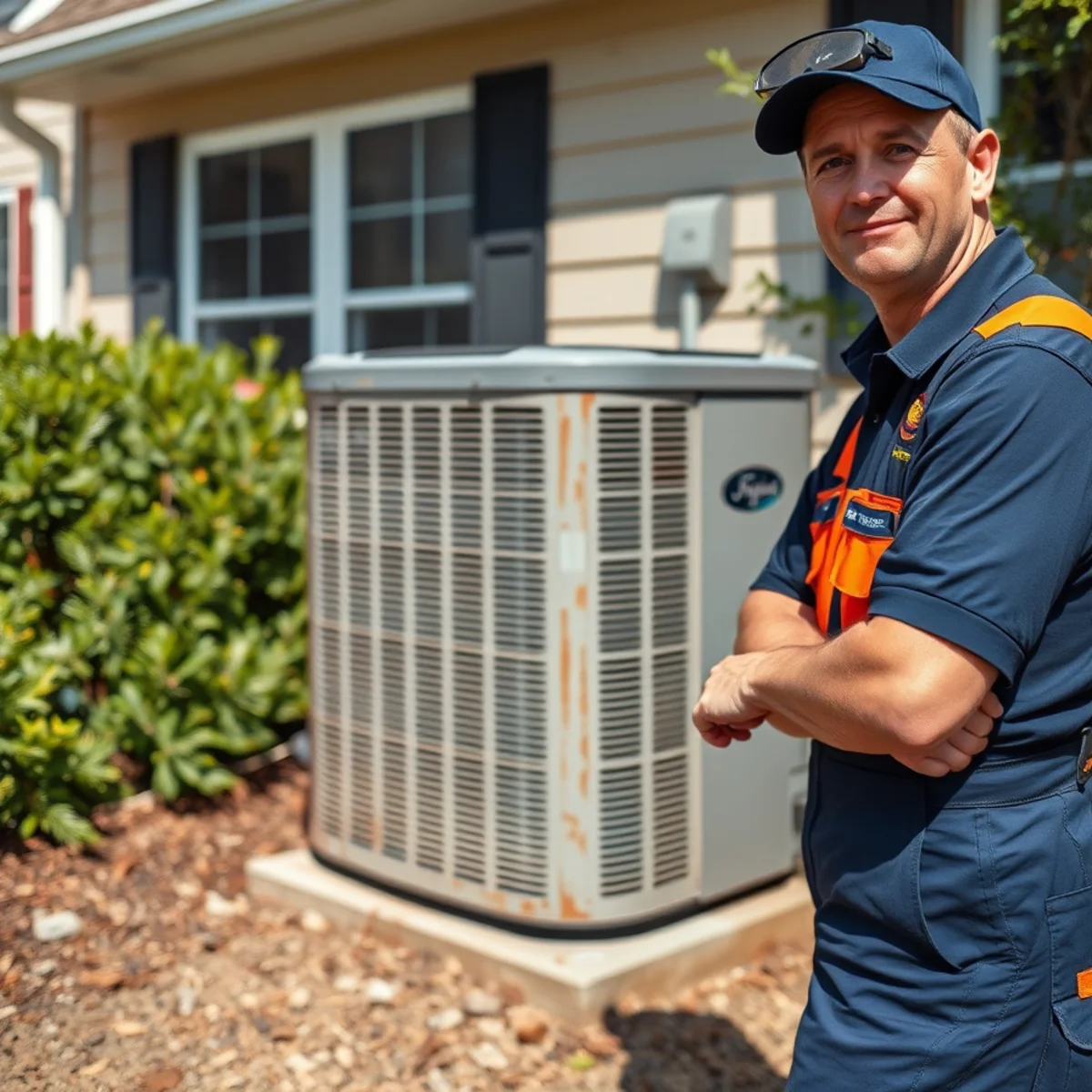
- Outdoor-unit corrosion. That condenser sitting out back takes rain, humidity, and pollen month after month. Coils corrode. Fins clog. Cabinets rust. If you're closer to Lake Tillery, the constant moisture off the water can speed that up even more.
- Pollen and debris. Spring around here coats everything in yellow. A dirty coil makes the system work harder and run hotter, which shortens its life.
None of this means your system is doomed early. It just means our equipment earns its keep, and the maintenance that owners up north can sometimes skip really matters here.
Signs Your System Is Near the End
Age is only part of the story. Watch for these warning signs, especially once you're past the 10-year mark:
- Rising energy bills with no change in how you use the system. Worn equipment loses efficiency.
- Frequent repairs. One repair every few years is normal. Two or three calls in a single season is your system telling you something.
- Uneven temperatures room to room, or a unit that just can't keep up on the hottest days.
- Strange noises like grinding, banging, or a constant hum that's new.
- Humidity that won't quit. If your house feels sticky even when the AC is running, the system may be losing its ability to dehumidify.
- R-22 refrigerant. Older AC units use a refrigerant that's been phased out. It's expensive and getting harder to find. If your system still runs on it, a major leak often makes replacement the smarter move.
A good rule of thumb: if a repair costs more than a third of what a new system would, and the unit is past 12 years old, replacement usually makes more financial sense.
How To Get More Years Out of Your System
The good news is that you have a lot of control over where your system lands in those ranges. The owners who get 18 or 20 years out of equipment all do the same handful of things:
- Get seasonal maintenance, twice a year. A spring check before cooling season and a fall check before heating season catch small problems before they become big ones. This is the single best thing you can do.
- Change your filters. A dirty filter chokes airflow and makes everything work harder. Check monthly during heavy-use seasons, and swap as needed.
- Keep the outdoor unit clear. Trim back shrubs, rinse off pollen, and keep grass clippings and leaves out of the fins. Give it a couple feet of breathing room on all sides.
- Keep the condensate drain clean. In our humidity, a clogged drain line is one of the most common summer service calls. It's easy to prevent.
- Don't ignore small issues. A little noise or a slightly higher bill is cheaper to fix today than after it takes out the compressor.
- Make sure it was sized and installed right. An oversized unit short-cycles and never properly dehumidifies. An undersized one runs nonstop. Proper installation is where lifespan is won or lost.
Maintenance isn't about selling you parts. It's about protecting the thousands of dollars you've already got sitting in your yard and your attic. Learn more about our seasonal maintenance and how a tune-up keeps your system honest.
Replacement: Right-Sizing For Our Climate
When it is time for a new system, the choices you make matter for the next decade and a half. A few things worth knowing for our area:
- Heat pumps dominate here for a reason. Our mild winters and hot summers are a near-perfect match for a heat pump's strengths. They cool and heat efficiently in the temperature range we actually live in.
- Dehumidification should be part of the conversation. A system sized and set up for humidity control will be more comfortable and last longer than one chosen on cooling capacity alone.
- Ductless is a real option for older homes. Mount Gilead has beautiful late-1800s and early-1900s homes downtown, and a lot of them never had ductwork. A ductless mini-split heats and cools those spaces without tearing into plaster walls.
- Check the ducts before you blame the unit. Sometimes the problem isn't the equipment at all. Leaky or undersized ductwork makes a great system perform poorly. If yours hasn't been looked at in a while, it's worth a check.
We service all major makes and models, and we've installed our share of equipment across Montgomery County. The right system for your neighbor isn't always the right one for you. Good advice starts with someone actually looking at your home, your ducts, and how you live in it. If you're weighing a heat pump for your next system, that's a conversation worth having before the old one quits on you.
The Bottom Line For Mount Gilead Homeowners
Plan on 12 to 20 years, lean toward the lower end if you skip maintenance, and lean toward the higher end if you stay on top of it. Our humid summers ask a lot of HVAC equipment, but a well-installed system that's cared for will serve your family well for a long time. The key is not waiting until a hot day in July to find out where yours stands.
If your system is creeping up in years, making new noises, or just not keeping up the way it used to, give EM Contractors LLC a call. We're a family-owned HVAC company right here in Mount Gilead, founded in 2005, and the Mabe family has been doing this work in our community for decades. We'll give you a straight, honest look at what you've got and a fair price on whatever comes next, whether that's a simple fix or a full replacement. No pressure, no scare tactics, just neighbors helping neighbors stay comfortable.
Frequently Asked Questions
A heat pump does double duty. It cools your home all summer and heats it all winter, so it runs nearly year-round. A gas furnace only works in the cold months and then sits idle. All that extra run-time is why heat pumps usually land around 12 to 15 years while furnaces often reach 15 to 20. It's not a knock on heat pumps; they're a great fit for our mild winters. They just earn their keep.
It depends on the age and what broke. If your outdoor unit and indoor coil are both 12-plus years old and one fails, replacing just half often leads to a mismatched system that runs less efficiently and breaks down sooner. On a newer system, a single repair makes sense. We'll look at what you've got, tell you honestly which way saves you money, and never push a full replacement when a fix will do.
If it's running well, keep running it. But know that R-22 was phased out, so it's expensive and getting harder to find. As long as your system holds its charge you're fine. The trouble comes if it springs a major leak. Recharging an old R-22 unit can cost more than it's worth, and at that point replacement is usually the smarter move. It's worth planning ahead so a hot July day doesn't force the decision for you.
Twice a year. A check in spring before cooling season and one in fall before heating season. Our long, humid summers put real strain on equipment, especially the compressor and the condensate drain, so the maintenance some folks up north skip actually matters here. It's the single best thing you can do to push your system toward the 18-to-20-year end of the range instead of the 10-year end.
Related Services
Written by
EM Contractors LLC
A family-owned heating and air conditioning company serving Mount Gilead, NC since 2005. Owner Eric Mabe and his crew share these tips from real work in local homes and businesses — honest advice, no sales pressure.