
"AC tune-up" gets used loosely. Some companies mean a 15-minute glance and a new filter. A real tune-up is a thorough, multi-point service that cleans, tests, and adjusts your whole cooling system before the heat hits. The difference shows up in July, when one system coasts through a 95-degree week and the other quits.
Here in Mount Gilead, our summers are long, humid, and hard on equipment. A heat pump or AC here runs more hours than the same unit would in a drier climate, and that humidity is rough on coils, drain lines, and outdoor metal. So a tune-up here isn't busywork. It's the cheapest insurance you can buy on a system worth thousands. Here's exactly what a complete one should include.
The Filter and Airflow Check
Airflow is where most cooling problems start. A clogged filter chokes the system, drives up your bill, and can freeze the coil solid.
- Inspect, clean, or replace the air filter and confirm it's the right size and type for your system
- Check the blower wheel and motor for dust buildup that throttles airflow
- Measure airflow across the system to confirm it's moving the right volume of air
- Look at the return and supply vents for blockages or closed dampers
A dirty filter is the single most common cause of a frozen coil and a no-cool call. We'd rather catch it on a calm spring afternoon than on the hottest Saturday of the year.
Coil Cleaning, Inside and Out
Your system has two coils. The indoor evaporator coil pulls heat out of your home. The outdoor condenser coil dumps that heat outside. Both have to be clean to do their job.
- Inspect and clean the outdoor condenser coil, which collects grass clippings, pollen, and cottonwood all spring
- Check the indoor evaporator coil for dirt and biological growth, common in our humidity
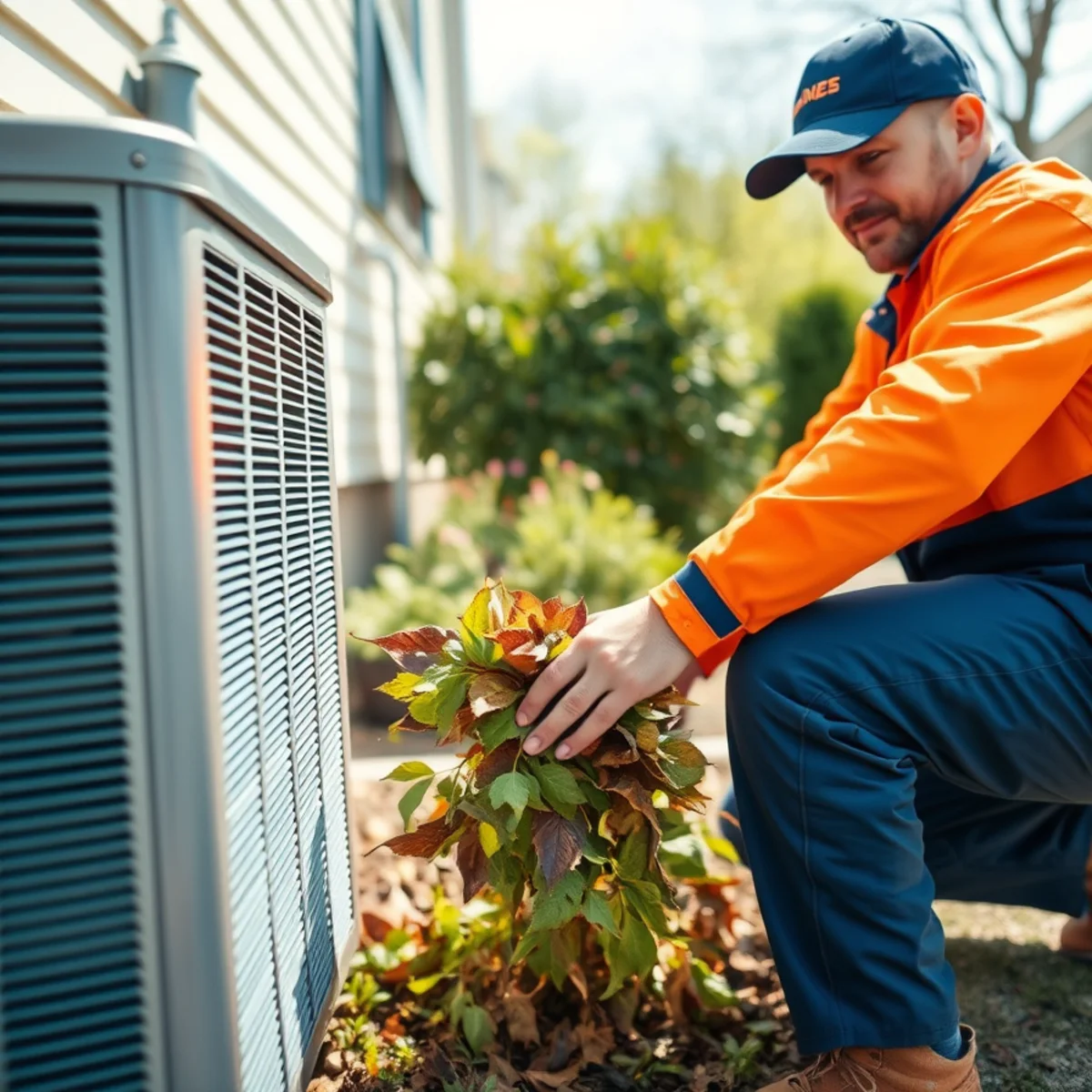
- Clear debris from around the outdoor unit so it can breathe
- Straighten bent coil fins where needed
A coil caked in pollen can't shed heat, so the compressor works harder and runs longer for less cooling. In a town surrounded by Uwharrie woods and farm fields, outdoor coils get dirty fast. This step alone often restores cooling capacity people thought they'd lost for good.
The Condensate Drain (Our Humidity's Best Friend)
This is the step that matters most in our climate, and the one cut-rate "tune-ups" skip. When your AC pulls humidity out of the air, that moisture has to go somewhere. It drains out through a small line, and that line loves to clog.
- Flush and clear the condensate drain line
- Check and clean the drain pan
- Test the float switch or safety overflow if your system has one
- Look for early signs of water staining or leaks
A clogged drain is the number one reason we see water on the floor, ceiling stains, and shut-down systems in Mount Gilead summers. Our long, sticky Piedmont days mean your AC is constantly wringing water out of the air, sometimes gallons a day. A two-minute flush during a tune-up prevents a real mess later. If you want the full story on that, our blog post on AC water leaks walks through what to do.
Refrigerant Charge and Performance Test
Refrigerant is what actually moves heat. Too little, and your system can't cool. An incorrect charge quietly wrecks efficiency and shortens compressor life.
- Check the refrigerant charge against the manufacturer's spec
- Measure temperature split (the difference between the air going in and the cooled air coming out)
- Check pressures on both sides of the system
- Inspect for signs of a refrigerant leak
Here's an honest note: a system that's low on refrigerant has a leak. Refrigerant isn't consumed like gas in a car. So if a technician finds you low, the right move is to find and fix the leak, not just top you off and send you a bill every year. We'll always tell you straight which one you're looking at.
Electrical and Safety Inspection
Loose connections and worn parts cause a surprising share of breakdowns, and some are genuine fire risks. This part of the tune-up is about reliability and safety both.
- Tighten electrical connections and inspect wiring for wear or corrosion
- Test the capacitor and contactor, the two parts most likely to fail on a hot day
- Check the disconnect and confirm voltage and amp draw are in range
- Inspect the compressor and fan motor for stress
A weak capacitor is one of the most common reasons a unit dies in a heat wave. It's cheap and quick to replace if we catch it sagging during a tune-up. Caught instead at 4 p.m. on a 95-degree Sunday, it becomes an after-hours emergency. Testing it ahead of time is exactly the kind of small fix that saves you a miserable night.
Thermostat, Controls, and Cycle Test
Finally, a good technician makes sure the brain of the system is telling the truth and that everything works together.
- Calibrate and test the thermostat for accurate readings
- Confirm the system starts, runs, and shuts off cleanly through a full cycle
- Check that the heat pump switches modes correctly, if you have one
- Verify the system reaches and holds the set temperature
This is where we put it all together and watch the whole system run start to finish. If something's off, this is when it shows.
What a Tune-Up Should Leave You With
When the work is done, you should get more than a clean unit. You should get the truth about your system.
- A plain-language rundown of what was checked and what was found
- A heads-up on any part that's worn but not failed yet, so you can plan
- An honest opinion on the age and condition of the system, with no pressure
- No surprise charges and no scare tactics
That last part matters to us. We're a family business, and the Mabe family has done HVAC around here for decades. We'd rather earn your trust with a fair, honest tune-up than push you toward a new system you don't need.
How Often Should You Get One?
For straight cooling systems, once a year in the spring is the standard, before the first real heat wave. If you run a heat pump, which heats and cools and therefore works year-round in our climate, plan on twice a year, spring and fall. That extra service keeps both sides of the system healthy and is well worth it on equipment that never really gets a break.
Whether you're in town near Highway 73, out toward Lake Tillery, or up around Troy and the Uwharrie communities, a tune-up before summer is the cheapest way to avoid a breakdown when you need cooling most. We service all major makes and models, on homes, businesses, and churches alike.
If your AC or heat pump hasn't been looked at this year, give EM Contractors LLC in Mount Gilead a call. We'll run the full checklist, tell you honestly where your system stands, and charge a fair price for it. No pressure, no upsell, just straight answers from folks who live and work right here in Montgomery County.
Frequently Asked Questions
A thorough one usually runs about an hour to ninety minutes, depending on the system and what we find. A real tune-up cleans coils, flushes the drain line, checks the refrigerant charge, tests the electrical parts, and runs a full cooling cycle. If someone is in and out in fifteen minutes, you got a quick look, not a tune-up.
Yes, and that's the best time to do it. Most of what a tune-up catches, a weak capacitor, a coil starting to clog, a drain line about to back up, doesn't show up until the system quits on the hottest day of the year. We'd rather find it on a calm spring afternoon than at 4 p.m. on a 95-degree Sunday.
Only if your system actually needs it, and here's the honest part: refrigerant isn't used up like gas in a car. If you're low, you have a leak. The right fix is to find and seal the leak, not top you off every year and hand you a bill. We'll always tell you straight which one you're looking at.
For a straight cooling system, once a year in the spring before the first real heat wave. If you run a heat pump, which heats and cools year-round here, plan on twice a year, spring and fall. Our long, humid Piedmont summers work equipment hard, so that regular service is the cheapest insurance you can buy.
Related Services
Written by
EM Contractors LLC
A family-owned heating and air conditioning company serving Mount Gilead, NC since 2005. Owner Eric Mabe and his crew share these tips from real work in local homes and businesses — honest advice, no sales pressure.