
Here's the short answer: book your HVAC maintenance in spring and again in fall. In North Carolina, those two windows do the most good for the least money. Skip them, and you find out your system is in trouble on the hottest or coldest day of the year, when everybody else is calling too.
I've run service calls around Mount Gilead and Montgomery County for years. The pattern never changes. The folks who tune up before the season turns rarely call us in a panic. The folks who wait usually call when it's 94 degrees and the upstairs won't cool. Let me walk you through the timing, and why it matters more here than it does in a lot of the country.
Why Timing Matters More in the Piedmont
Our climate is hard on equipment. Summers are long, humid, and they run near 90 degrees for weeks at a stretch. We get around 50 inches of rain a year. Winters are mild but real, with cold snaps that pull on a heat pump. That combination is why heat pumps dominate around here, and why your system rarely gets a true rest.
A heat pump cools in summer and heats in winter. It works close to year-round. An air conditioner in a dry climate might idle for months. Ours don't. More run time means more wear, more chances for refrigerant issues, and more dirt building up where it shouldn't. Maintenance is how you stay ahead of that wear instead of chasing it.
Humidity is the local stressor people underestimate. Long compressor run-times mean lots of condensate moving through your system. That water has to drain right or it backs up. Moisture and salt-free Carolina air still corrode outdoor coils over time. A maintenance visit catches a clogging drain line or a corroding contactor before it strands you.
The Best Window: Spring, Before You Need Cooling
Schedule your cooling tune-up in March or April. That's the sweet spot. The weather is mild, the parts houses are stocked, and a technician can spend real time on your system instead of rushing to the next no-cool call.
Here's what a spring visit should cover:
- Check refrigerant charge and look for leaks. A system low on refrigerant cools poorly and runs the compressor hot. Caught early, it's a small fix. Ignored, it can cost you a compressor.
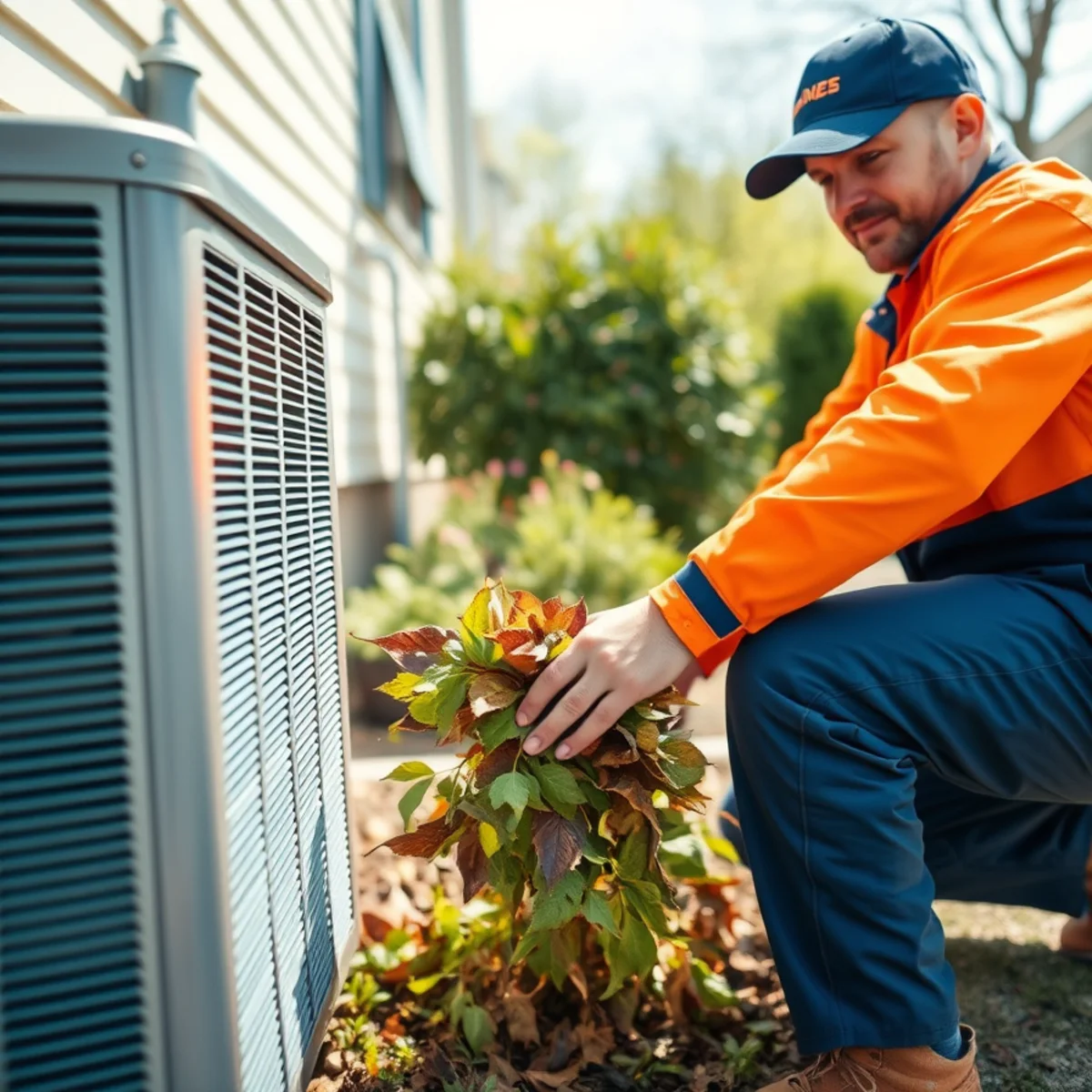
- Clean the outdoor condenser coil. A winter's worth of pollen, grass, and leaf debris chokes airflow. Dirty coils are one of the most common reasons a unit can't keep up in July.
- Clear and test the condensate drain. This is the humidity insurance. A plugged drain in our climate floods a pan and can shut the system down or damage a ceiling.
- Test the capacitor and contactor. These cheap parts fail in heat. Replacing a weak capacitor in spring is routine. Replacing it on a 95-degree Saturday is an emergency call.
- Check the blower, filter, and airflow. Good airflow is what actually pulls humidity out of your house.
Get this done before the first real hot stretch, usually mid to late spring here. Once the heat lands, the calendar fills fast, and you want to be the house that's already handled it. If you're due, our AC maintenance and repair covers all of this.
The Second Window: Fall, Before the Heat Turns On
Schedule your heating tune-up in September or October. Same logic, other end of the year. You want the heat checked before you actually lean on it, not the first 28-degree morning when it won't fire.
What fall maintenance covers depends on what you have:
- Heat pumps: We reverse the system and test it in heating mode, check the defrost cycle, and confirm the auxiliary heat strips come on when they should. A heat pump that can't defrost ices over in a cold snap. Most of our area runs heat pumps, so this is the common visit. See our heat pump service for what's included.
- Gas and oil furnaces: This is also a safety check. We inspect the heat exchanger for cracks, test the burners and flame, and check the flue. A cracked heat exchanger can leak carbon monoxide. That's not a maintenance item you put off. We handle this on our furnace service visits.
- Both: New filter, thermostat check, and a look at the electrical connections that loosen over a season of run time.
Fall is also when problems from summer show up. A heat pump that struggled in August often has a charge or coil issue that's easier to find when we're not fighting the heat.
Why Off-Season Beats In-Season Every Time
You can call us in July or January. We'll come. But booking in the shoulder seasons gives you real advantages:
- You skip the rush. When everyone's system fails at once in a heat wave, the schedule tightens for everybody. Maintenance bookings in spring and fall get you a relaxed appointment and an unhurried technician.
- You catch small problems small. A worn part found in April is a cheap part. The same part failing in a heat wave is an after-hours repair and a hot, miserable wait.
- Your system runs efficient when it counts. A clean, charged, tuned system uses less power through the months you run it hardest. That shows up on your power bill.
- You protect your warranty. Many manufacturers require documented regular maintenance to keep the warranty valid. If a big part ever fails, you want that paperwork.
A Simple Year-Round Rhythm for NC Homeowners
Two professional visits a year is the standard for our climate. Between them, a few things you can do yourself:
- Change your filter every 1 to 3 months. More often if you have pets or run the system hard. A clogged filter is the number one cause of avoidable service calls.
- Keep the outdoor unit clear. Trim back shrubs, pull weeds, and rinse off grass clippings. Give it a couple feet of breathing room on all sides.
- Watch the condensate drain in summer. If you see water around the indoor unit or a damp spot near it, call. That's the humidity catching up.
- Listen and notice. New noises, weak airflow, or a system that runs nonstop are early warnings. Catching them between tune-ups saves money.
If your home is one of the older places downtown without much ductwork, the rhythm is the same but the equipment may be a ductless mini-split. Those need their filters and coils kept clean too, and they reward regular attention. Take a look at our ductless mini-split service if that's your setup.
What If You Missed the Window?
Don't wait for the next perfect month. If it's mid-summer and you've never had your system looked at, the best time to start is now. The cost of a tune-up is small next to a compressor replacement or a no-cool weekend with company coming.
The honest truth is that most major HVAC failures give warning signs first. Maintenance is how we catch those signs. A good visit isn't about selling you parts you don't need. It's about a fair, careful look that keeps your system running and your bills predictable.
Talk to a Local Tech Who Knows the Climate
EM Contractors LLC has been keeping homes and businesses comfortable in Mount Gilead since 2005. We're family-owned, the Mabe family has done HVAC in Montgomery County for decades, and we treat your system like we'd treat our own. We service all major makes and models, residential and light-commercial, from lake homes out near Lake Tillery to churches and shops in town.
If you're due for a spring cooling tune-up or a fall heating check, or you just want an honest set of eyes on a system that's acting up, give us a call. We'll give you a fair price and a straight answer. Get on the schedule before the season turns, and let's keep you comfortable year-round.
Frequently Asked Questions
Spring and fall. Book your cooling tune-up in March or April, before the first real hot stretch, and your heating check in September or October, before you lean on the heat. The weather is mild, parts are stocked, and your tech isn't rushing between no-cool calls. Get it done before the season turns and you're the house that's already handled it.
Twice a year is the standard for our climate. Around Mount Gilead, most homes run heat pumps that cool all summer and heat all winter, so the system rarely gets a real rest. Two visits -- one for cooling, one for heating -- keep you ahead of that wear. Between visits, change your filter every 1 to 3 months and keep the outdoor unit clear.
Our summers are long, humid, and run near 90 degrees for weeks, and our winters still bring cold snaps that pull on a heat pump. Humidity is the stressor folks underestimate -- long run-times push a lot of condensate through the system, and a plugged drain can flood a pan or shut you down. A tune-up before the season catches a clogging drain or a weak capacitor before it strands you on the hottest or coldest day.
Don't wait for the next perfect month. If it's mid-summer and your system has never been looked at, the best time to start is now. Most major HVAC failures give warning signs first, and a tune-up is how we catch them. The cost of a visit is small next to a compressor replacement or a no-cool weekend. Give us a call and we'll get you on the schedule.
Related Services
Written by
EM Contractors LLC
A family-owned heating and air conditioning company serving Mount Gilead, NC since 2005. Owner Eric Mabe and his crew share these tips from real work in local homes and businesses — honest advice, no sales pressure.